Free Things to See & Do
More than three miles of gravel jogging and walking trails around the Washington Duke Inn & Golf Course. Named for Al Buehler, former Duke track coach and six-time ACC Champion. [ more info ]
The world's largest technical and scientific textile membership society where practically all dyes, finishes, and textile chemicals produced in the U.S. are tested. Call for tour information. [ more info ]
Former Lucky Strike cigarette factory transformed into a one-million-sq.-ft. retail/residential/office campus, including restaurants, shops, amphitheater, and on-site parking garages. [ more info ]
Outdoor venue on the American Tobacco Campus, seating more than 2,000 in front of a stage beneath the Lucky Strike Water Tower. Live performances, events, and receptions. [ more info ]
12 miles of trails from Downtown Durham to NC Hwy 54, then from Massey Chapel Rd to Durham/Chatham County line. Bicycling, hiking, walking, and running. [ more info ]
Contains many instances of funereal art and the graves of many of Durham’s early African-American business and community leaders. Located next to White Rock Baptist Church. [ more info ]
Location of the largest troop surrender that effectively ended the Civil War. Includes re-enactments, reconstructed farmhouse, outbuildings, interpretive center, and museum. [ more info ]
In the early 1900s, African-American businesses prospered along what became known as "Black Wall Street." In the 1960s, Civil Rights pioneers staged sit-ins here and received a memorable visit from Dr. Martin Luther King, Jr. Features NC Highway Historical Marker and six bronze sculptures commemorating the history of the street, and is the location of the Historic Parrish Street Forum, a meeting space that will also serve as a history education resource. [ more info ]
These repurposed, 1904 Neo-Romanesque brick tobacco warehouses have been home to locally owned shops and acclaimed restaurants since their renovation in 1981. On the National Register of Historic Places, the buildings now anchor a Downtown dining, shopping, and entertainment district. [ more info ]
Bicycle club welcoming visitors on weekends for recreational and scenic rides around Durham and Orange counties. [ more info ]
Independent, non-profit organization affiliated with Duke University that focuses on cultivating new talent in the documentary field. The center maintains four galleries of revolving exhibitions that attract students of all ages from around the country. [ more info ]
The Old City Stables, later the City Garage (late 1930s), have been transformed into City Place. Both the main building and the former Fire Drill Tower are listed on the National Register of Historic Places. [ more info ]
Doris Duke Center at Sarah P. Duke Gardens
The Doris Duke Center is an 18,000-sq.-ft. complex complementing the existing landscape of Duke Gardens. Features outdoor terrace, education wing and library, horticultural complex with two greenhouses, and special events hall available for rental. Open M-Sat 9am-6pm; Sun 12pm-5pm [ more info ]
Downtown Durham Historic District
North Carolina's first commercial district on the National Register of Historic Places. Includes Main Street, government buildings, central business district, Convention Center, Brightleaf & Warehouse Districts, and American Tobacco & Golden Belt Campuses. [ more info ]
Downtown Guide & Walking Tour
Printed, two-to-four-mile walking guide of Durham’s historic Downtown area, available at the Durham Visitor Information Center, 101 E Morgan St, Downtown. [ more info ]
Decades of Duke University’s athletic achievements showcased with visual and audio exhibits, theatre, and trophies of national championships. [ more info ]
7,060-acre teaching and research forest of Duke University with a variety of ecosystems represented. Preserved for research and recreation since the 1930s. Hiking, biking, horseback riding, fishing, and picnics permitted; see website for regulations. [ more info ]
National Historic Landmark where Washington Duke started his worldwide tobacco empire. Duke family's mid-1800s home, tobacco barns, original factory, and museum showcase the beginnings of the modern-day tobacco industry. [ more info ]
Built in 1907, the twin-towered, Gothic Revival-style church named for Washington Duke features 10-bell, manually-operated carillon (performances nightly) and Holtkamp organ. [ more info ]
[ more info ]
Duke University Center for Lesbian, Gay, Bisexual, and Transgender Life
LGBT exhibits with a focus on exploring the intersections of sexuality and transgender people with race or religion/spirituality. [ more info ]
Built in 1930, the cathedral-like centerpiece of Duke's West Campus soars 210 feet and is one of the last great collegiate Gothic projects in the United States. Features the Flentrop Organ (5,200 pipes), 50-bell carillon, and stained-glass windows. Numerous chapel services and recitals each week. Saturdays often booked for weddings. [ more info ]
One of the 18 local arts organizations in Durham, the Art Guild, stages six-week exhibitions of original North Carolina artistry at the council's Suntrust Gallery. [ more info ]
Downtown arts center showcases many different art forms in its Allenton, Semans, and CCB galleries and two performance spaces. The DAC serves more than 60 arts organizations and more than 600 artists through classes, exhibits, festivals, and more. [ more info ]
Gallery focusing on group shows for young artists arranged by guest curators with diverse skills and interests. [ more info ]
10,000-sq.-ft. state-of-the-art park features a floating quarter pipe, launch boxes, step-up bank, three stairwells with handrails, a street clam, and an eight-foot trog bowl. Helmets and pads required. [ more info ]
5.8-acre urban park offers gardens, outdoor/public art, an arts pavilion, trails, a 10,000-sq.-ft. skate park, and other amenities. Adjacent to the Durham Farmers' Market Pavilion, the park hosts the Durham Craft Market each Wed and Sat, Apr-Nov. [ more info ]
Built c. 1902 as the nerve center of the world's largest hosiery mill complex. Today it provides housing for seniors. On National Register of Historic Places. [ more info ]
Eno River State Park
State park with five access areas in Durham and Orange counties. Enjoy bird-watching, canoeing/rafting, fishing, hiking, and picnic shelters within 3,900 acres of secluded wilderness along the banks of the Eno River. [ more info ]
Amateur winemaking operation providing and selling several varieties of grapes to wineries throughout the state. Tours by appointment only; wine not available to the public. [ more info ]
Ephphatha Church
Neo-Gothic-Revival-style church constructed in 1930. One of only four churches in the nation to be built for the Deaf. Now on the National Register of Historic Places. [ more info ]
Built in 1893, the mills originally produced tobacco bags and later became nation's largest producer of denim. Remaining buildings serve as office space and apartment homes. [ more info ]
Pressure chambers used to simulate ocean and high altitude environments. Center has conducted joint research with NASA, U.S. Navy, and international governmental agencies. Call for tour information. [ more info ]
Natural area for boating/sailing, mild whitewater rafting, fishing, hiking, and rockhounding. [ more info ]
Foremost library and archives forest and conservation history materials in the world, including books, periodicals, maps, news clippings, photographs, and searchable databases. [ more info ]
Geer Cemetery
First cemetery for African-Americans in Durham, including the founders of White Rock Baptist Church and St. Joseph’s AME Church and organizer of the Hayti neighborhood. Includes some funereal art. [ more info ]
Once a historic textile mill campus founded by Julian Carr; now a creative arts hub featuring unique dining and shopping, a live music venue, art galleries, green space, festival space, live/work lofts, creative office space, and 35 artist studios that spill into a central artist-run gallery, ROOM 100. On National Register of Historic Places. [ more info ]
Includes the ROOM 100 Gallery, showcasing exhibitions of emerging local and national contemporary artists, as well as studios of painters, jewelry-makers, photographers, mixed-media artists, and more in a creatively restored seven-acre historic mill campus. Visit every third Friday to shop in the studios and meet the artists. [ more info ]
Granite and brick mansion, built in 1911 for James Edward Stagg, a Durham banker, textile manufacturer, and railroad executive, is the last remaining Chateauesque-style dwelling in Durham and one of only a few in the state. Now a unique meeting venue and bed & breakfast inn with eight guest rooms. [ more info ]
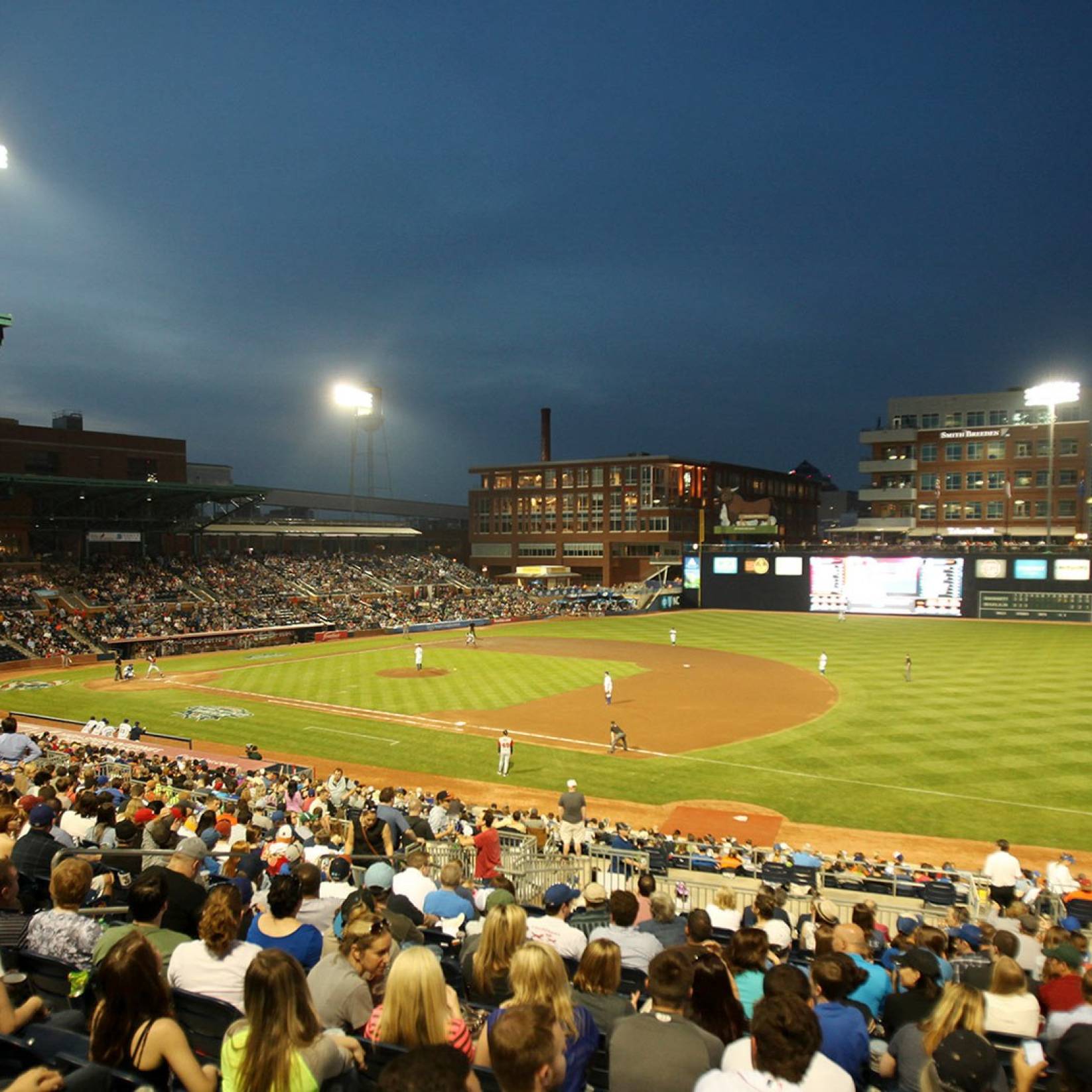
Former home (1926-94) of the famous Durham Bulls and film location for the movie Bull Durham. Home to the NCCU Eagles; the Bulls play a mile south in Durham Bulls Athletic Park. [ more info ]
Once among the South's largest plantation holdings, this state historic site features an 18th-century house, slave quarters, and a unique great barn. Dedicated to the preservation and study of African-American historic culture. [ more info ]
Historic Woolworth's Counter
After a pioneering sit-in at the Durham Woolworth's lunch counter on Feb. 8, 1960, Dr. Martin Luther King Jr. continued this form of civil protest in other locations throughout the South to great effect. A portion of this original lunch counter, its seats, and pie rack are now preserved in the James E. Shepard Memorial Library at North Carolina Central University. [ more info ]
History of Medicine Collections
Collection of rare books and medical artifacts that capture the history and practice of medicine over the centuries. [ more info ]
Displays of photography and early 20th-century equipment. Contemporary exhibits featured on rotating basis. Call for ticket information. [ more info ]
Imperial Center & Walking Trail
2.5-mile hiking and jogging trail with easy access from five lodging properties. [ more info ]
Built in 1925 for N.C. Central University founder James E. Shepard; served as the official residence of the university’s presidents through the 1980s. Houses displays and interactive exhibits on the life and work of Dr. Shepard. [ more info ]
N.C. Central University's main library serves as a repository for federal documents, maps, and microfilm, as well as Genealogical resources. The library's Treasure Room preserves many primary materials on African-American life and culture. [ more info ]
John Hope Franklin Center for Interdisciplinary & International Studies
The Center's public gallery houses rotating exhibits that showcase documentary and artistic responses to Franklin's life and work as well as African and African-American culture and other topics of global significance. [ more info ]
Picnic area/shelters, hiking trails, primitive camping, bird-watching, and rockhounding. Park access is free; fee for camping, boating, and fishing. [ more info ]
Little River Regional Park & Natural Area
391-acre park and natural area developed from tobacco farmland. Historic barns, houses, and sheds now serve as picnic shelters, information centers, and landmarks accompanying the more than 15 miles of walking, hiking, mountain-biking, and horseback-riding trails. Playground, wildlife, bird-watching, picnicking, and rockhounding. [ more info ]
Exhibits of works by international artists. [ more info ]
Over 100 acres of history dating to 1869. Civil War veterans and soldiers, tobacco magnates, and community leaders rest here, including the Duke and Carr families. Many gravesites marked with Victorian funereal art. [ more info ]
Built around 1750 as a non-denominational meeting house. Transformed into a Methodist church in 1808. [ more info ]
Museum of Durham History
The Museum of Durham History is coming soon! For the latest information on current programs and progress on its development, visit www.museumofdurhamhistory.com. [ more info ]
History Beneath Our Feet, a project of the Museum of Durham History, is a unique online "Gazetteer" that tells the human side of Durham's compelling past through lively stories and images. Focusing on the Downtown Historic District and Hayti/Fayetteville Street corridor, the project collects information about the people for whom Durham's streets and schools were named and their contributions to the area's history. [ more info ]
2.2-mile trail through the New Hope Creek flood plain with hiking and walking. Begins near Githens Middle School in Southwest Durham. [ more info ]
Meandering waterway through parts of Duke Forest home to local wildlife. Offers paddling, bird-watching, and hiking. [ more info ]
Founded in 1910, NCCU is the nation's first publicly-supported liberal arts college for African-Americans. The 103-acre campus features a bronze statue of founder Dr. James E. Shepard, the NCCU Art Museum, one of the nation’s highest rated law schools for women, and the L.T. Walker Complex, named for former U.S. Olympic Committee President LeRoy Walker. [ more info ]
Collections and temporary exhibitions of 19th- and 20th-century African-American art. Local artists and students also showcased here. [ more info ]
North Carolina Collection at Durham County Library
Extensive records of Durham's and North Carolina's past through historical documents, maps, records, and photographic archives, as well as printed local history and Genealogy resources. [ more info ]
North Carolina Mutual National Historic Landmark / M&F Bank Building
The Parrish Street branch of M&F Bank, one of the oldest black-owned bank in the country. Originally built in 1921 for NC Mutual Life Insurance Co, the Neo-Classical Revival building serves as a symbol for Durham's "Black Wall Street." [ more info ]
North/South Greenway Trail
3.5-mile trail from the Eno River through Downtown Durham ideal for hiking and running. [ more info ]
Old Bull Building
Built in 1874 at the height of popularity of the W.T. Blackwell and Company's world-renowned "Bull Durham" tobacco brand. Now a National Historic Landmark containing upscale residences. [ more info ]
Renovated 1916 Neo-Classical-Revival building made of Indiana limestone. Facade of fluted stone pilasters with Corinthian capitals, solid bronze doors, and stone balconies. [ more info ]
Patterson's Mill Country Store, Inc.
Turn-of-the-century country store and doctor's office/pharmacy featuring displays of mercantile and pharmaceutical Americana and tobacco marketing memorabilia. [ more info ]
Uncover unusual wildflowers and unique rock formations on this 84-acre peninsula formed by the Eno River. Includes hiking trail; occasional guided tours by the NC Botanical Garden. [ more info ]
America's seventh-largest private university library houses several thousand rare and unique materials, including maps, photographs, films, broadsides, Confederate prints, ancient clay tablets, manuscripts, and books printed prior to 1501. Houses many Genealogy resources, including local histories and published family genealogies. [ more info ]
Organized as a hunt club in 1875, it became one of the nation's leading stables and dairy farms. Riding lessons available. [ more info ]
Hiking, jogging, and biking trails between Rock Quarry and Northgate Park. [ more info ]
The Museum includes an array of equipment that has been used in parapsychological research over the past 70 years, beginning in the 1930's at the Duke Parapsychology Lab, and continuing through to the work done at the Rhine today. [ more info ]
World's most famous laboratory studying extrasensory perception (ESP), telepathy, psycho kinesis, and related mental abilities. Library, exhibits, and tours by appointment. [ more info ]
Exhibits of Jewish and Israeli religious and creative arts and crafts, original programs of Judaica, and religious prints and books from the Rosenzweig Collection. [ more info ]
RTP Jogging & Pedestrian Trails
Nearly 15 miles of walking and bicycle paths through Research Triangle Park. [ more info ]
55-acre gardens known as one of the premier public gardens in the U.S. , with 200+ colorful plant varieties viewable from more than five miles of walkways and paths. Seasonal plantings ensure that each visit is a new experience. Walking and trolley tours available; call for information. [ more info ]
Selena Warren Wheeler Collection at Stanford L. Warren Library
Collection of African-American cultural artifacts, history, and literature named for Warren’s daughter. The second African-American library in North Carolina, it was originally established in 1913 in the basement of the old White Rock Baptist Church. [ more info ]
African-American cultural and educational institution that houses a community room, two classrooms/artists' studio, dance studio, the two-level Lyda Moore Merrick Gallery, Rhythm & Blues Gallery, and the 450-seat St. Joseph's Performance Hall. [ more info ]
Restored former sanctuary of St. Joseph's AME Church, one of America's first autonomous African-American churches dating back to 1869. On the National Register of Historic Places, this 1891 Richardsonian Romanesque building includes stained glass windows honoring legendary patrons. Renovated into a performance hall by St. Joseph's Historic Foundation, Inc. [ more info ]
The Duke University Musical Instrument Collections
Unique collection of over 500 rare and historic musical instruments found nowhere else in the Southeast, including instruments from around the world dating from the time of Mozart and Beethoven. [ more info ]
The George Watts Hill Pavilion for the Arts
One of only a few large-scale, public facilities in the Southeast offering mold-making and metal casting. The tree-of-life art design on the Pavilion is a prominent feature of Durham Central Park. [ more info ]
The world's largest university-related research park with more than 170 companies employing over 52,000 people. Carved from Durham pinelands in 1959 as a special Durham County tax district, RTP is a globally prominent high-technology research and development center that serves as an economic driver for the entire region. See sidebar for more information. [ more info ]
Gallery designed for a hands-on experience of art for the visually impaired and blind. [ more info ]
Durham’s oldest operating brewery offers its product in kegs, growlers and cans. Making craft beer in authentic styles has garnered the operation a strong local reputation. Tours offered most Saturdays at 1pm; visit website for complete schedule. All guests must be 21 years of age. [ more info ]
Historic low brass musical instrument collection displaying over 250 vintage instruments. [ more info ]
One of the nation's top universities; founded as Trinity College and renamed in 1924 after an endowment by James Buchanan Duke. Highlights include Duke University Chapel, Sarah P. Duke Gardens, Cameron Indoor Stadium, 7,060-acre Duke Forest, Duke Lemur Center, Nasher Museum of Art, and Duke University Medical Center. Student-led campus tours conducted through the admissions office; call for information. [ more info ]
Located along the Eno River, the park features a reconstructed 1778 working grist mill with cornmeal for sale, the historic McCown-Mangum House dating to the mid-1800s, the Hugh Mangum Museum of Photography, hiking trails, and amphitheater. [ more info ]
Founded in 1866, this congregation was served for many years by Dr. Augustus Shepard, father of N.C. Central University founder Dr. James E. Shepard. Dr. Martin Luther King, Jr. addressed its congregation with a history-making civil rights speech following the 1960 Woolworth lunch counter sit-in in Durham. [ more info ]
"Gardens at Witherspoon" features 2,000 rose bushes on display; shop offers a diverse selection of roses, perennials, ornamental grasses, unique pots, planters, fountains, and birdbaths. Gardens best for visiting May-October. Free admission. [ more info ]